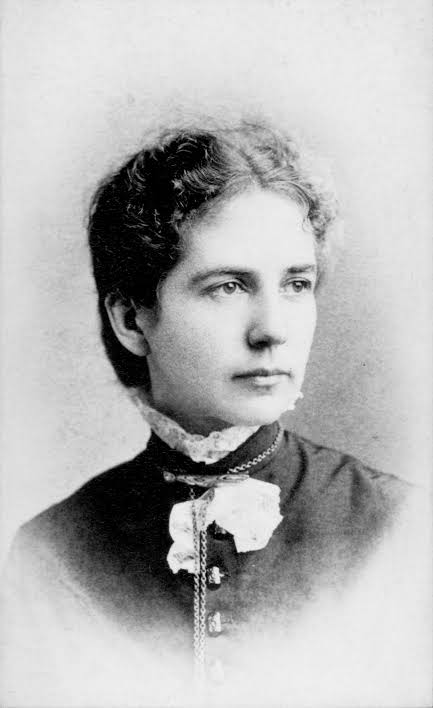
 Gertrude Howe (September 13, 1846 – December 29, 1928) was a pioneering American Methodist missionary, educator, and translator who spent 57 years living and working in
China.
Gertrude Howe (September 13, 1846 – December 29, 1928) was a pioneering American Methodist missionary, educator, and translator who spent 57 years living and working in
China.Partner Lucy H. Hoag
Queer Places:
Rulison Girls' High School, 34 Nanhu Rd, Xun Yang Qu, Jiu Jiang Shi, Jiang Xi Sheng, China, 332099
Shang Shui Lu, Donghu District, Nanchang, Jiangxi, China, 330009
Gertrude Howe (September 13, 1846 – December 29, 1928) was a pioneering American Methodist missionary, educator, and translator who spent 57 years living and working in
China.
Gertrude Howe was born on September 13, 1846, in Poughkeepsie, New York, to a Quaker family deeply involved in abolitionism and the Underground Railroad. The family later relocated to Michigan. Intellectually driven, Howe broke barriers by attending the Michigan Agricultural College (1870–1871) as one of its first female students, followed by the University of Michigan and the Michigan State Normal School, where she graduated in 1872.
In September 1872, under the auspices of the Woman’s Foreign Missionary Society (WFMS) of the Methodist Episcopal Church, Howe traveled to Kiukiang (Jiujiang), China. In 1873, she and fellow medical missionary Lucy H. Hoag founded a girls' boarding school (which later became the Rulison Girls' High School). Notably, the school was revolutionary for its time, strictly requiring students to have unbound feet to enroll.
Founded by Howe and Lucy H. Hoag in 1873, the physical remnants of the Rulison Girls' High School (Jiujiang, Jiangxi, China) carry a heavy historical significance. The iconic 1907 brick administrative and classroom buildings stand on a rise off Yuliang South Road in the Xunyang District of Jiujiang, recognized today as a National-Level Historical and Cultural Site. It serves as a physical reminder of the progressive curriculum they taught and their radical policy requiring students to have unbound feet.
Howe devoted herself fully to the local community. She adopted and raised four Chinese daughters—including Kang Cheng (Ida Kahn), whom she tutored in English and Western sciences. In 1892, Howe escorted Ida Kahn and another brilliant student, Mary Stone (Shi Meiyu), back to the United States to study medicine at the University of Michigan. Kahn and Stone graduated in 1896, becoming two of the very first Chinese women to earn Western medical degrees, returning to China to open hospitals and revolutionize the nursing profession.
Howe also engaged in prolific translation work, rendering a Methodist hymnal and a comprehensive history of the Reformation into Chinese. She spent her final years living in Nanchang with her daughter Ida Kahn and passed away there in December 1928.
While Gertrude Howe is not explicitly documented or self-identified as LGBTQ+ in modern terms, her life is frequently studied within queer history, feminist history, and transnational adoption studies for several distinct reasons:
Like many single, college-educated Western women of the late 19th century who entered the mission fields, Howe circumvented the traditional expectations of heteronormative marriage and nuclear family structures. Her deep, lifelong collaborations and cohabitation with other women—such as her early partnership with Lucy H. Hoag and later living with her adult daughter Ida Kahn—fit into the historical framework of "Boston marriages." These spaces allowed women to form intense, emotionally exclusive domestic partnerships outside of patriarchal marriage.
In Nanchang, Gertrude Howe lived and worked alongside her adopted daughter, Dr. Ida Kahn (Kang Cheng), at the compound of the medical mission they established at Shangshui Lane, Nanchang, Jiangxi, China. This is where Dr. Ida Kahn founded a Christian women and children's dispensary in 1902–1903, known locally as the Kangji Clinic/Yiguan, which eventually expanded into the formal Nanchang Women and Children's Hospital in 1911. True to her lifelong philosophy of integration, Gertrude Howe declined to live in separate, isolated foreign missionary enclaves. Instead, she shared a home directly within this bustling local medical compound, supervising community outreach and living here until her death in December 1928. Following the Chinese Communist Revolution, the missionary hospital was taken over by the state and grew significantly. Today, it is recognized as the direct predecessor of the Jiangxi Provincial Maternity and Child Health Hospital. While the hospital has expanded to modern campuses (such as its main historical branch at No. 318 Bayi Avenue in the Donghu District), its roots trace completely back to the Shangshui Lane property.
Scholars of gender and empire (such as David Eng) look at figures like Howe through the lens of queer diasporas and alternative kinship. By rejecting the "Westerners-only" resorts, living entirely among the Chinese population, and choosing to legally adopt four Chinese girls as a single woman, Howe intentionally constructed a non-traditional, transnational family unit that disrupted standard Western imperialist and Victorian maternal norms.
By educating young women, protecting them from foot-binding, and encouraging them to seek professional autonomy (like Dr. Ida Kahn and Dr. Mary Stone, who themselves chose lifelong careers over marriage), Howe helped foster a network of independent women. This deliberate creation of a woman-centric, homosocial sphere is a frequent focal point for historians mapping the roots of early global queer and feminist networks.
References:
 Women, Peace and Welfare: A Suppressed History of Social Reform, 1880-1920 Paperback – June 1, 2019 by Ann Oakley |
Other references:
Support this project
This website is a passion project researched, developed, and funded entirely by me. If you find the content valuable and would like to help support the ongoing research and hosting costs, any contribution is deeply appreciated.
Thank you for keeping this independent resource alive!
My books on Amazon: Elisa Rolle's books